

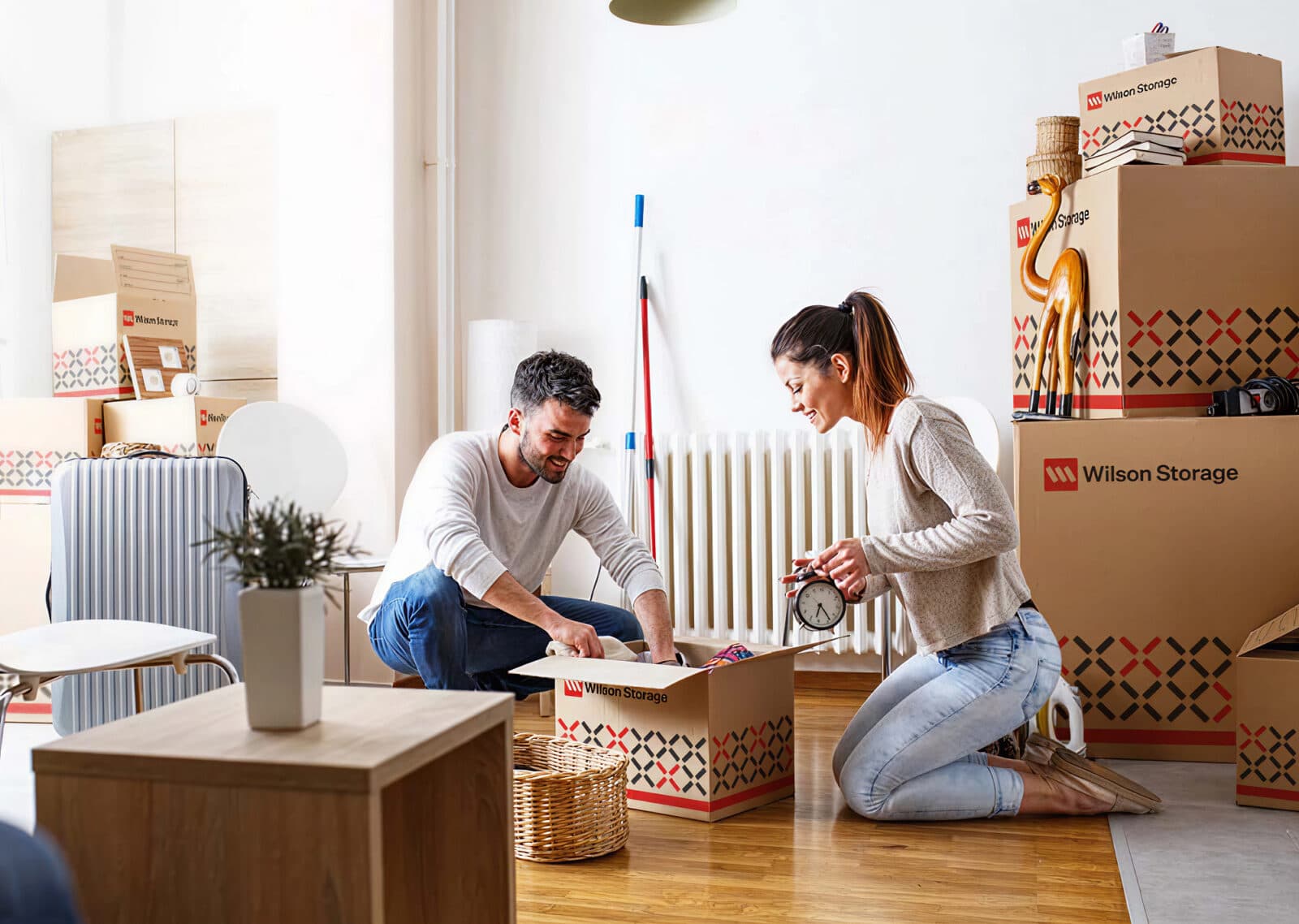
Reframing convenience as a competitive advantage
Moving, downsizing or renovating is inherently stressful. Buying boxes isn’t the hard part — getting the right materials, at the right time, without adding another task, is.
We’ve partnered with Wilson Storage since 2015, evolving its digital ecosystem over time. This phase, beginning in early 2024, focused on transforming the existing Box Shop into a more effective customer service tool and a scalable growth channel.
That thinking led to Box on the Run. Instead of treating the Box Shop as a basic click-and-collect offer, the goal was to make it genuinely useful in real customer moments — introducing delivery (including same-day in supported areas) alongside collection.
The challenge
This wasn’t about launching ecommerce from scratch. The Box Shop already existed — it just wasn’t working hard enough.
The offer lacked visibility, clarity, and strategic focus. At the same time, customer expectations had shifted. In the convenience economy, ease and speed matter as much as product quality.
The opportunity was clear: evolve an underutilised offer into something commercially meaningful — simpler to understand, easier to buy from, and better aligned with real customer needs. Delivery was part of the solution, but not the whole answer.
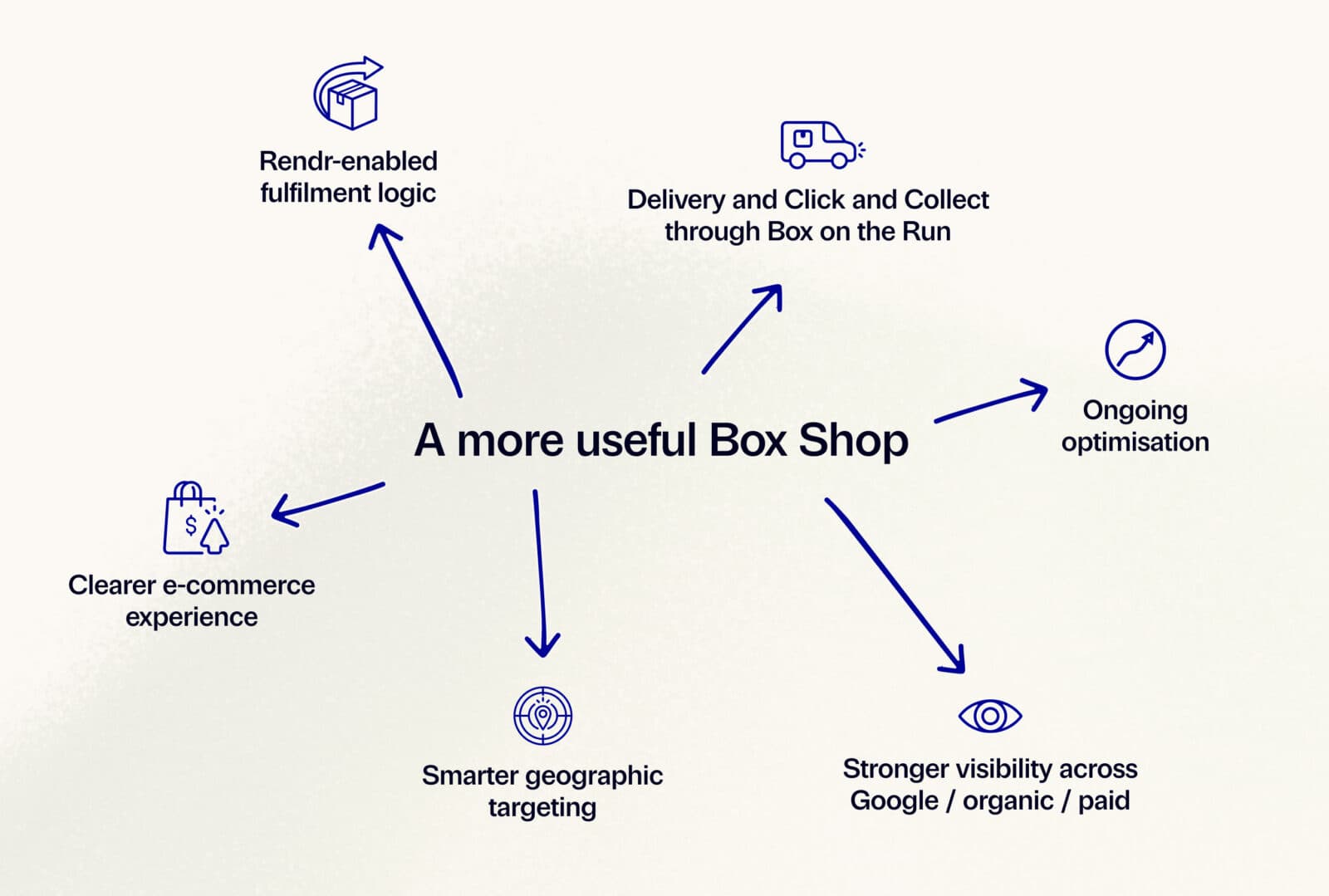
How we approached it
We treated the Box Shop as a connected service, not just a storefront — and focused on continuous improvement from the outset.
Working with Wilson Storage, we refined the experience, clarified the proposition, and supported it with a more deliberate marketing strategy. The Box Shop evolved into a credible ecommerce channel, with a clearer promise: quality packing materials, delivered when needed or ready for collection.
The systems integration of Rendr as a logistics partner enabled flexible delivery, including same-day in supported areas. But more importantly, it forced alignment between operations and marketing.
Rather than scaling broadly, we focused on serviceable areas first — matching media investment to fulfilment capability, then expanding as coverage improved. This ensured growth was sustainable, not premature.
This phase wasn’t about switching something on. It was about continuously refining how the service worked, how it was positioned, and how it reached customers.
The work
Execution combined UX improvements, delivery integration, and ongoing optimisation.
We iterated on the Box Shop experience — refining landing pages, simplifying checkout, and clarifying delivery options. Small changes, like improving address handling and checkout behaviour, made the service feel more reliable and intuitive.
The Rendr integration introduced operational complexities. Bulky products created delivery challenges, and oversized items required careful handling to remain cost-effective. These weren’t one-off fixes — they were worked through progressively alongside Wilson’s team, improving systems, workflows, and service reliability over time.
At the same time, we expanded visibility across key channels including Google Ads, Merchant Center, Shopping, and onsite placements. The goal was consistent: make the service easier to find, easier to understand, and easier to trust.
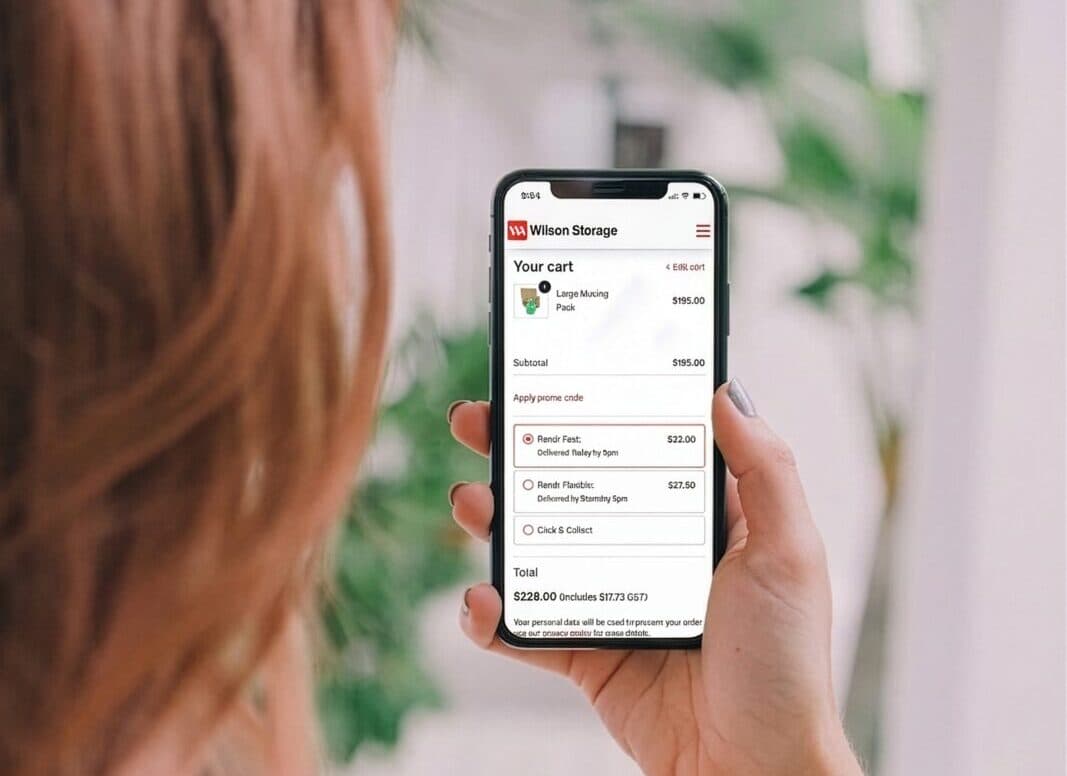
Rendr Checkout
Results
The biggest shift was behavioural: the Box Shop started performing like a true growth channel once it was treated like one.
Online revenue more than doubled year-on-year, with performance across all channels driving online transactions up 180%.
The contrast over time is telling. Between January and May 2024, performance was modest. One year later, CPC-driven revenue for the same period had increased by more than 600%.
Crucially, this wasn’t driven by a single change. It came from sustained improvement across the full experience — proposition, visibility, delivery capability, and ongoing optimisation.
Results in numbers
The takeaway
Growth didn’t come from the launch — it came from what followed.
This phase reinforced a consistent pattern: meaningful results are driven by continuous improvement. Refining the checkout, solving operational challenges, improving targeting, and expanding service coverage all contributed to long-term performance.
It also highlighted the importance of treating existing offers seriously. When the Box Shop was repositioned as a core part of Wilson Storage’s proposition, it became more visible, more useful, and more valuable.
If you have a digital product that isn’t living up to its potential, the answer is rarely a single feature or update. Real growth comes from aligning service, operations, and marketing — and then improving them continuously.
