
Property marketers used to have a clearer mental model of the buyer journey. A buyer searched, clicked through to a listing or website, looked around, and enquired when the fit felt right.
That journey was never perfectly neat, but it is becoming less linear. A buyer might first notice a project through a portal alert, Google result, map listing, social post, paid ad, AI-generated answer, or suburb research query. By the time they reach the developer, builder, or agency website, they may already have formed an opinion.
That changes the role of the owned website.
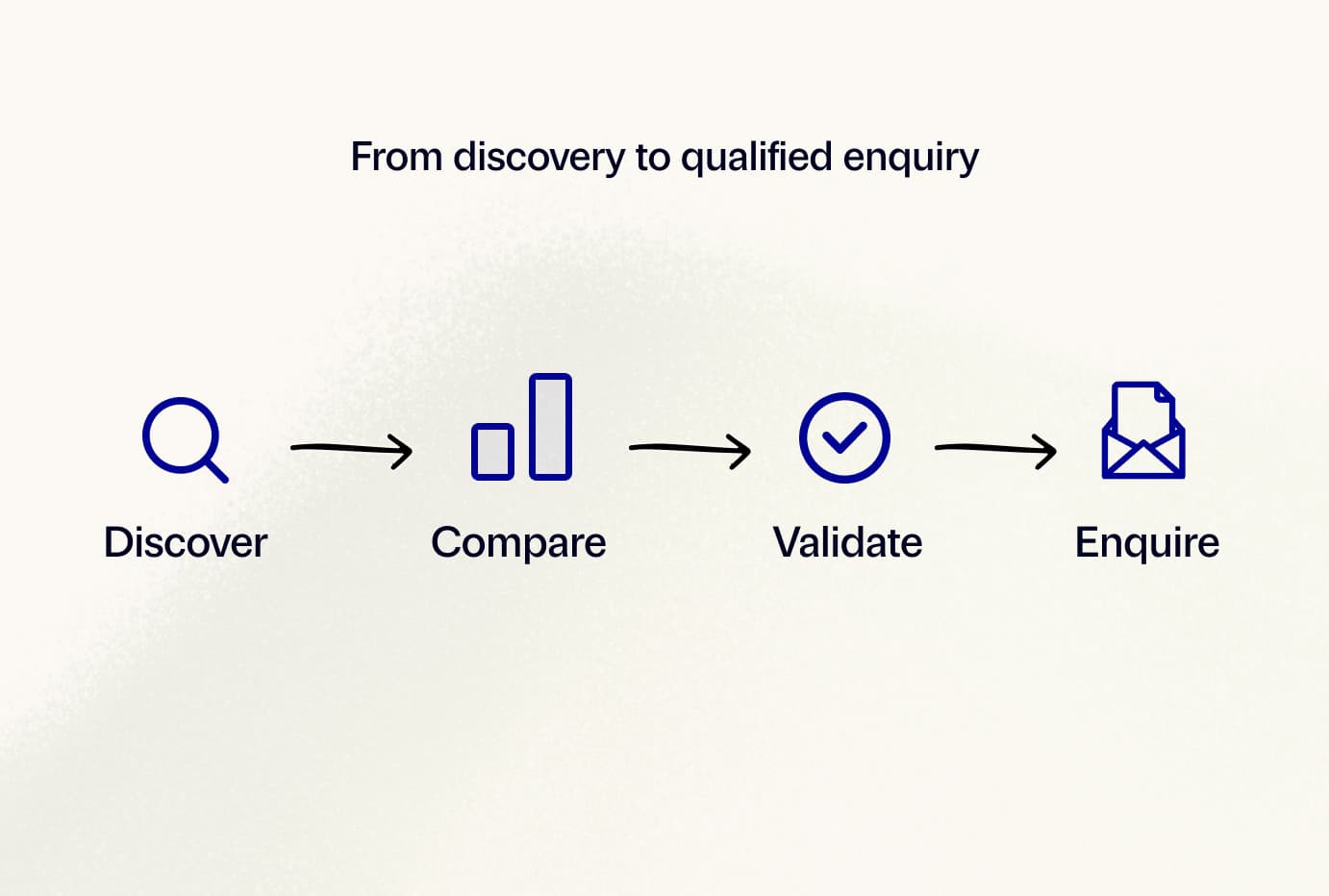
Rather than chasing every platform for the first click, property businesses need a clearer view of what the website should own once a serious buyer wants to validate, compare, trust, and enquire.
Discovery is moving further upstream
Google’s recent home-listing activity in the United States is a useful signal, but it needs careful handling. It points to a broader direction in search. It does not prove that Australian property discovery has already shifted away from local portals.
That broader direction still matters. Search results are becoming richer. AI search surfaces can answer more of the early research task. Portals are also becoming more sophisticated, with Australian platforms investing in stronger data, audience engagement, and AI-assisted search experiences.
For property marketers, the risk is a widening gap between how buyers research and how performance is reported. Buyers can gather more information before they ever reach an owned website, while reporting still tries to explain the journey as if one source deserves all the credit.
A buyer might see a portal listing, search the project name, compare suburb information, click a paid ad, return later through direct traffic, then submit an enquiry. If the report simply crowns the final click, the business may misunderstand what actually helped the buyer move forward.
That matters because channel reporting shapes budget, creative, landing page priorities, and sales follow-up. When measurement is too simple, the business can overvalue the last touch and undervalue the parts of the journey that built confidence.
That is why the owned website belongs inside the enquiry system, rather than being treated as another traffic destination.
The website has a different job from a portal
Portals are good at what they are built to do. They aggregate supply, support browsing, give buyers a wide comparison set, and create visibility where people are already searching.
An owned website has a different job. It should carry the depth that a third-party listing cannot fully hold.
That might include the project story, developer credibility, construction status, display-suite details, inclusions, local context, buyer FAQs, floorplan logic, availability explanations, and the proof that helps a buyer feel the opportunity is real.
Think about a buyer comparing townhomes in a growth corridor. A portal can help them discover the project and compare basic details. As they become more serious, they need more than a card, map pin, and enquiry button. They may want to understand the surrounding amenity, what is included in the price, how the floorplans differ, what stage is available, what the builder has delivered before, and what happens after they enquire.
If the owned website cannot answer those questions clearly, the business is asking a high-intent buyer to make a decision with thin context.
Serious buyers need validation before capture
A lot of property websites still treat enquiry as the main event. The page presents the offer, the form waits nearby, and success is measured by submission volume.
That view is too narrow for a fragmented journey.
Some buyers are browsing. Some are shortlisting. Some are checking whether a project is credible. Some are comparing lots, facades, inclusions, price ranges, location benefits, timelines, or availability. Some want to speak to a consultant, while others need a price guide, display-suite appointment, brochure, or saved floorplan before they are comfortable.
The owned website should support those different levels of intent.
That calls for clarity, rather than an overloaded feature set. A serious buyer should be able to move from interest to confidence without guessing what to do next. Good enquiry design helps the buyer choose the right next step, and helps the sales or marketing team understand what kind of enquiry has arrived.
Raw lead volume can hide important differences in quality. A form submission from someone who has compared the right options, understood the project, and selected a meaningful enquiry path is different from a low-context form fill generated by a broad campaign.
If the website only measures “lead submitted”, it misses the more useful performance signal: which channels, pages, and interactions are producing enquiries worth following up?

The owned journey needs better infrastructure
This is where development becomes part of the marketing argument.
If discovery happens across portals, Google, maps, paid media, social, and AI search, the owned site needs to be reliable when the buyer arrives. It should load quickly, keep key content stable, make images and floorplans easy to use, expose important pages clearly, and avoid hiding essential information behind fragile interactions.
That reliability matters because buyers rarely experience the website as infrastructure. They experience it as confidence or friction. A slow gallery, unclear availability note, broken floorplan interaction, or vague enquiry path can interrupt the moment when a buyer is trying to decide whether the project deserves more attention.
The content behind the visible page needs the same care. For a property business, that might mean clean data around projects, locations, stages, lots, floorplans, availability, pricing guidance, imagery, enquiry paths, and status updates.
Structured content is more than SEO decoration. It helps teams keep information current, reuse details across pages and campaigns, support internal search or comparison tools, and pass more useful context into analytics and CRM systems.
Forms matter too. A submission has more value when it carries the context the business needs: project, property type, source, campaign, preferred contact method, availability interest, and any qualification signals the sales team actually uses.
When that infrastructure is weak, the website becomes a brochure with a form attached. When it is stronger, the website becomes the layer that turns fragmented discovery into clearer information, measurable intent, and better follow-up.
The takeaway
Property businesses cannot control every place a buyer might begin their search.
That has always been true to some degree, but the number of discovery surfaces is growing. Google, portals, AI search, maps, paid media, and social channels all shape the buyer’s understanding before the owned website gets a chance to do its work.
The practical response is to get clearer about what the owned website should own: the depth, proof, comparison support, enquiry quality, and follow-up context that external discovery surfaces can only partly provide.
For property marketers, that means treating the website as more than a listing repository. It should validate the buyer’s interest, carry the depth of the project, support comparison, qualify enquiry, and connect the journey into follow-up and measurement.
The teams that handle this well give serious buyers better reasons to continue, and give the business better context for what happens next.
Explore more
The Drive-Thru Test for Website Navigation
What drive-thru menus reveal about clearer website navigation—and how labels, hierarchy and entry context help visitors confidently choose their next step.
Headless Architecture Is Really About Adaptability
Headless architecture separates content from presentation, helping digital platforms adapt across websites, campaigns and customer touchpoints.

When Mobile Stops Being One Column
Foldables show where mobile UX is heading: away from one-column layouts and toward adaptive experiences that preserve context, comparison, and decision confidence.